
Signs You May Need Suboxone Treatment for Opioid Addiction
If you find yourself frequently asking, do I need suboxone, it is likely time to pay attention to signs like strong cravings or uncomfortable withdrawal symptoms when you try to stop using opioids. At Addiction Therapy Services in Columbus, Ohio, board-certified Dr. William Rothe, M.D., provides a safe, welcoming environment to help you answer this important question. By carefully evaluating your unique physical health and personal struggles, he can determine if this helpful medication is the right choice to stabilize your daily life. Together with required in-house counseling, this compassionate approach gives you the clear guidance and caring support needed to confidently build a healthier future. For more information, contact us or schedule an appointment online. We are conveniently located at 4760 Sawmill Road, Suite B, Columbus, OH 43235.
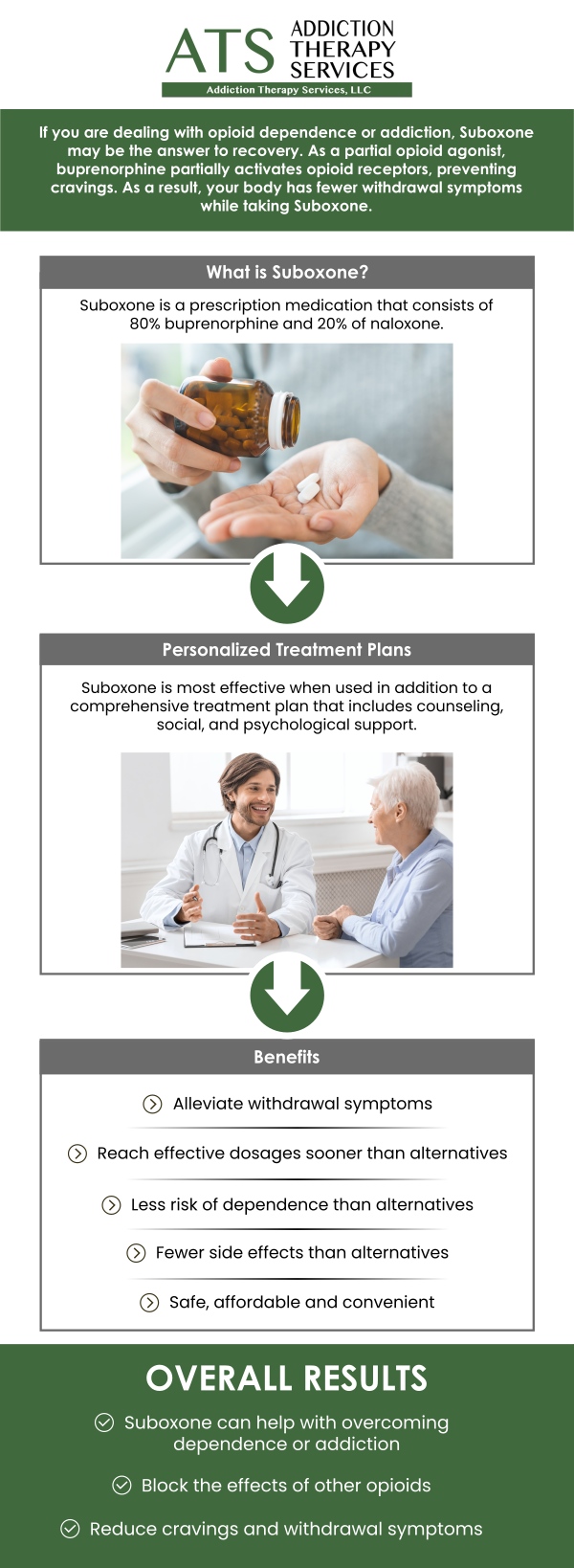
Table of Contents:
How do I know if my prescription opioid use requires medical intervention?
What is the clinical difference between opioid dependence and opioid addiction?
What signs may indicate that I need Suboxone treatment for opioid addiction?
Are there specific physical or behavioral signs that indicate I need MAT?
Recognizing Opioid Addiction Signs and Exploring Suboxone Support With Dr. William Rothe, M.D., at Addiction Therapy Services
Prescription opioid use may warrant medical evaluation when it becomes difficult to control, begins affecting daily responsibilities, or continues despite unwanted consequences. Warning signs can include taking more medication than intended, unsuccessful attempts to reduce use, strong cravings, spending significant time obtaining or using opioids, or feeling unable to function normally without them. These patterns can be associated with opioid use disorder and deserve professional assessment.
Physical symptoms can also provide important clues. Withdrawal symptoms after reducing or missing a dose, increasing tolerance, or repeatedly using opioids to prevent feeling sick may indicate physical dependence. However, tolerance and withdrawal alone do not necessarily mean that someone has an opioid addiction, particularly when opioids are being taken exactly as medically directed.
A medical evaluation can help determine whether the concern involves expected physical dependence, problematic opioid use, or opioid use disorder. At Addiction Therapy Services, patients can discuss their opioid use openly and receive individualized guidance about appropriate treatment options rather than trying to make this distinction alone.
Opioid dependence generally refers to physical adaptation that can develop after repeated opioid exposure. A person who is physically dependent may experience withdrawal symptoms when opioid use is suddenly reduced or stopped. Tolerance may also develop, meaning the body becomes accustomed to the medication’s effects. Physical dependence can occur even when prescription opioids are being taken according to medical instructions.
Opioid addiction, clinically referred to as opioid use disorder (OUD), involves more than physical dependence. It is characterized by a problematic pattern of opioid use that causes significant impairment or distress. Possible signs include loss of control over use, persistent cravings, unsuccessful efforts to cut down, continuing opioids despite physical or relationship problems, and allowing opioid use to interfere with work, family, or other responsibilities.
Because dependence and opioid use disorder can overlap, a professional assessment is important before deciding on treatment. Addiction Therapy Services can evaluate patterns of opioid use, withdrawal symptoms, cravings, health history, and day-to-day functioning to help determine the appropriate level of support.
People wondering “do I need Suboxone?” may benefit from an opioid use disorder evaluation if they experience repeated cravings, difficulty controlling opioid use, unsuccessful attempts to stop, withdrawal symptoms that lead them back to opioids, or continued use despite negative effects on health and daily life. A history of returning to opioid use after trying to quit can also indicate that structured treatment should be considered.
Suboxone contains buprenorphine and naloxone. Buprenorphine is one of the medications used to treat opioid use disorder and can reduce opioid withdrawal symptoms and cravings. However, experiencing one or more warning signs does not automatically mean Suboxone is the right option. Treatment decisions should consider the person’s opioid-use pattern, current physical dependence, other substances being used, overall health, and individual treatment goals.
At Addiction Therapy Services, a clinical assessment can help determine whether Suboxone-based treatment or another evidence-based approach may be appropriate. Treatment planning is individualized so that care addresses both immediate symptoms and longer-term recovery needs.
If you’re ready to take the next step or want to learn more about Suboxone and your treatment options, contact Addiction Therapy Services today. Your path to recovery can start here.
At Addiction Therapy Services, we understand that overcoming opioid use disorder or other substance use disorders is a challenging journey. Medication-Assisted Treatment (MAT) is a proven, evidence-based approach that combines FDA-approved medications with counseling and behavioral therapies to support lasting recovery. Recognizing when MAT may be the right step is crucial—and our team is here to help you every step of the way.
Physical Signs You May Benefit from MAT
If you experience withdrawal symptoms—such as nausea, sweating, shaking, muscle aches, diarrhea, or intense cravings—when you try to stop using opioids or other substances, MAT may be an important option for you. Needing to use more of the substance to get the same effect (developing a tolerance), or struggling with repeated, unsuccessful attempts to quit, are additional signs that MAT could make a difference in your recovery journey.
Behavioral Signs MAT Might Help
Substance use can impact every area of your life. If you notice your substance use is interfering with responsibilities at work, school, or home, or straining important relationships, it may be time to seek help. Spending significant time obtaining, using, or recovering from the substance, continuing use despite negative consequences, neglecting activities you once enjoyed, isolating from loved ones, or taking risks while under the influence all suggest that MAT and supportive therapy could help you regain control.
How Addiction Therapy Services Can Help
If these physical or behavioral signs sound familiar, Addiction Therapy Services encourages you to reach out. Our experienced clinical team will work with you to assess your needs and determine if MAT is appropriate for your situation. We provide compassionate, judgment-free care, and guide you through all available treatment options—including counseling and ongoing support—to help you achieve and maintain recovery.
Take the Next Step
Recovery is possible, and you don’t have to do it alone. Contact Addiction Therapy Services today to schedule a confidential consultation and learn more about how MAT and personalized therapy can support your journey to wellness.
Recognizing that you or a loved one might need help for opioid addiction can be a difficult but brave first step. If you find yourself experiencing intense cravings, facing harsh withdrawal symptoms when you try to stop, or noticing that opioid use is taking over your daily life, it may be time to seek medical support. Often, people wonder if they need a medication like Suboxone to help them break free. At Addiction Therapy Services in Columbus, Ohio, board-certified Dr. William Rothe, M.D., offers a welcoming, judgment-free space to discuss these signs. He takes the time to understand your unique situation and helps you figure out if Medication-Assisted Treatment is the right path for your recovery.
If Suboxone is the right fit for you, it can serve as a highly effective tool to help you get your life back on track. This proven medication works by easing withdrawal symptoms and stopping intense cravings, allowing your body to stabilize safely. However, overcoming addiction is about more than just physical relief. At Addiction Therapy Services, Dr. Rothe and his team pair this medical care with built-in counseling to support your emotional health. By combining medical supervision with consistent, caring therapy, they provide the complete, trusting support you need to confidently build a healthier, substance-free future. For more information, contact us or schedule an appointment online. We are conveniently located at 4760 Sawmill Road, Suite B, Columbus, OH 43235. We serve patients from Columbus OH, Dublin OH, Upper Arlington OH, Hilliard OH, Worthington OH, and surrounding areas.

Check Out Our 5 Star Reviews


Additional Services You May Need
- Outpatient Alcohol Detoxification
- Heroin Addiction
- Suboxone Treatment
- Medication-Assisted Opiate Therapy
- Tobacco Cessation
- Benzodiazepine
- Drug Addiction
- Opioid Addiction
- Addiction Therapy
- Buprenorphine
- Alcohol Addiction
- Opioid Use Disorder with Mat
- Alcohol Use Disorder with Mat
- Sublocade Injections for Opioid Dependence
- Addiction Counseling

Additional Services You May Need
• Outpatient Alcohol Detoxification
• Heroin Addiction
• Suboxone Treatment
• Medication-Assisted Opiate Therapy
• Tobacco Cessation
• Benzodiazepine
• Drug Addiction
• Opioid Addiction
• Addiction Therapy
• Buprenorphine
• Alcohol Addiction
• Opioid Use Disorder with Mat
• Alcohol Use Disorder with Mat
• Sublocade Injections for Opioid Dependence
• Addiction Counseling




 Send Text
 How May I Help You?
