
Addiction Therapy in Columbus, OH
At Addiction Therapy Services (ATS), we provide physician-led addiction therapy in Columbus, OH, with a focus on medication-assisted treatment (MAT), Suboxone treatment, and ongoing medical care. Our approach brings together medication management, regular follow-up, and individual counseling to address the medical and day-to-day challenges of recovery. Dr. William Rothe, M.D., who is board-certified in Addiction Medicine and Emergency Medicine, leads our practice. We offer treatment for opioid and alcohol use disorders, along with care for benzodiazepine dependence and tobacco cessation. Your treatment plan is based on the substances involved, your health, and your recovery goals. For more information, contact us or schedule an appointment online. We are conveniently located at 4760 Sawmill Road, Suite B, Columbus, OH 43235.
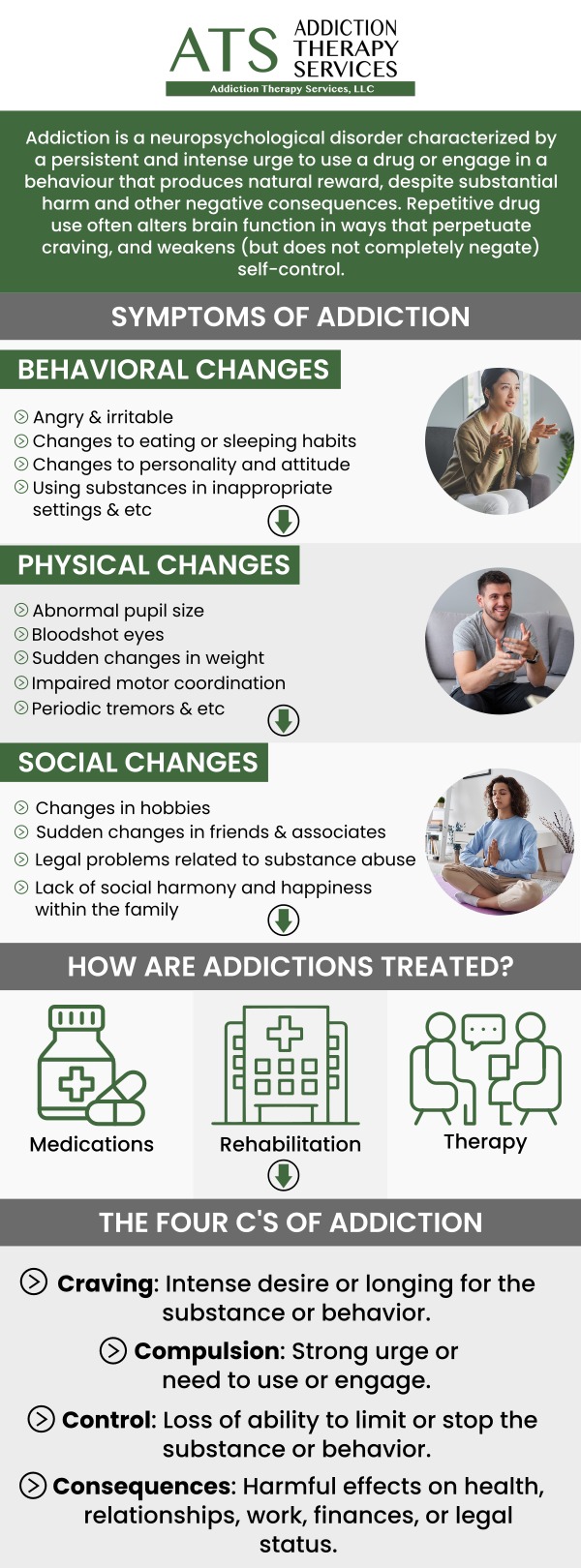
Table of Contents:
What is addiction therapy, and how does it work?
Who can benefit from addiction therapy?
How does addiction therapy help in recovery?
How long does addiction therapy usually last?
Comprehensive Addiction Therapy in Columbus, OH: Physician-Led Care at Addiction Therapy Services, an Outpatient Recovery Center in Ohio
Safety Considerations for Addiction Therapy
Contraindications and Treatment Eligibility
Can I seek addiction treatment if I’m not sure I’m ready to stop?
Can I receive opioid addiction treatment if I already take a benzodiazepine?
What should I tell a surgeon or dentist about my addiction medication?
Can addiction treatment address alcohol and opioid use at the same time?
Explore Personalized Addiction Therapy in Columbus, OH with Dr. William Rothe, M.D. at Addiction Therapy Services
Medical References
Addiction therapy is a treatment plan that addresses substance use and the health problems that can come with it. For people with opioid or alcohol use disorder, medication may be an important part of care. Medication-assisted treatment combines appropriate medication with medical monitoring and behavioral support.
At ATS, we begin with an evaluation of your substance use, current medicines, health history, and treatment needs. Dr. Rothe considers factors such as withdrawal symptoms, cravings, previous treatment, and medication safety before recommending a plan.
When medication is appropriate, we explain how to begin treatment and what to watch for. Follow-up visits allow us to review your response, discuss side effects, and make changes when needed. Individual counseling supports this medical care by helping you manage triggers and develop recovery skills.
Addiction therapy may help people who have difficulty controlling alcohol or drug use, experience strong cravings, or continue using despite problems with their health or daily life. Medical treatment can be especially important when withdrawal or repeated returns to substance use make recovery difficult.
At our clinic, an evaluation may be helpful if you:
• Have opioid use disorder involving heroin or prescription opioids.
• Need to discuss Suboxone treatment or another medication option for opioid use disorder.
• Have alcohol use disorder and need medical support to reduce drinking or manage withdrawal safely.
• Have developed benzodiazepine dependence and need an assessment for supervised tapering.
• Want help stopping tobacco use.
Not everyone needs the same medicine or level of care. Dr. Rothe evaluates whether our outpatient services can safely meet your needs. Physical dependence on a prescribed medicine also does not automatically mean addiction; the assessment helps clarify what care is appropriate.
Medication can address physical symptoms that make recovery harder. For opioid use disorder, buprenorphine can reduce withdrawal symptoms and cravings, helping patients stay engaged in treatment. Medication treatment for opioid use disorder is also associated with a lower risk of overdose and death, although it does not eliminate those risks.
For alcohol use disorder, certain medications can help reduce the urge to drink. The right choice depends on your health, other substance use, and treatment goals. Alcohol withdrawal requires its own medical assessment and management.
Our follow-up care gives you a place to discuss whether treatment is controlling symptoms, how you are taking your medicine, and any new concerns. Counseling supports this process with practical skills for handling stress and situations linked to substance use.
Treatment length depends on your condition and response to care. Some patients need medical treatment for months, while others benefit from ongoing care for years. We review your symptoms, medication response, substance use, and daily functioning over time.
Suboxone maintenance treatment has no fixed maximum duration. It may continue as long as it is helping you meet your treatment goals. Dr. Rothe discusses ongoing treatment and any future changes with you; stopping medication is not a required milestone for every patient.
Do not stop or reduce Suboxone on your own. Withdrawal can occur, and returning to opioid use after treatment changes can increase overdose risk. Any change should include a medical plan and continued support.
Medication-assisted treatment is a central part of our care. We select treatment according to the substance involved, your medical history, and how you respond over time.
Suboxone treatment for opioid use disorder
Suboxone is an important part of our outpatient opioid treatment services. It contains two medicines: buprenorphine, which helps reduce opioid withdrawal and cravings, and naloxone, which helps discourage misuse by injection.
Dr. Rothe reviews your recent opioid use and symptoms before providing individualized instructions for starting treatment. Timing matters because starting buprenorphine too soon after other opioids can trigger sudden withdrawal.
Once treatment begins, we monitor how you are doing and adjust the plan when appropriate. Suboxone treatment includes ongoing attention to symptom control, medication safety, and recovery progress. It is a treatment for opioid use disorder; alcohol and benzodiazepine dependence require their own care plans.
Sublocade injections for ongoing opioid treatment
We also offer Sublocade, a long-acting buprenorphine injection administered by a healthcare professional. It provides a monthly maintenance option for eligible patients with moderate to severe opioid use disorder. Dr. Rothe evaluates whether injectable treatment is appropriate and explains the requirements for starting and continuing it.
Outpatient alcohol detoxification and continued treatment
Our outpatient alcohol detoxification service provides medical management for patients who can safely receive withdrawal care outside a hospital. An evaluation is needed to determine eligibility. After withdrawal care, ongoing alcohol use disorder treatment can include medication when appropriate, follow-up, and counseling.
Benzodiazepine management and tobacco cessation
We provide medically supervised care for benzodiazepine dependence, including gradual tapering when appropriate. We also offer tobacco cessation services. These needs are considered alongside other substance use so treatment can address medication interactions and withdrawal risks.
Individual counseling alongside medical care
Our in-person, one-on-one counseling is available at the time of medical appointments. It supports the medication plan by helping patients work through triggers, coping strategies, and the practical challenges of recovery.
Tell our team about all medicines and substances you use, along with any history of overdose, severe withdrawal, seizures, liver or breathing problems, or pregnancy. Depending on the medicine, side effects may include nausea, constipation, headache, drowsiness, or injection-site discomfort. Report side effects so your clinician can assess them.
Use medication only as prescribed. Do not change doses, share medication, or switch between treatments without medical guidance.
Alcohol, benzodiazepines, and other sedating drugs can increase the breathing and overdose risks of buprenorphine. Tell your clinician about any use so it can be addressed safely.
Do not abruptly stop alcohol or benzodiazepines if you may be physically dependent without getting medical advice. Withdrawal can be life-threatening.
Keep take-home medicine secured away from children. Ask about keeping emergency naloxone available; the naloxone in Suboxone does not replace an overdose-rescue medicine.
Call 911 if someone cannot be awakened or has slow or difficult breathing. Give naloxone if an opioid overdose is suspected and it is available, and stay with the person until help arrives. Seizures, hallucinations, or severe confusion during withdrawal also need emergency medical care.
A contraindication is a medical reason a particular treatment should not be used. Being unable to take one medicine does not mean all addiction treatment is unavailable.
• Medication allergies: Suboxone should not be used by someone allergic to buprenorphine or naloxone. Sublocade must also be avoided when a person is allergic to the medicine or its ingredients.
Other conditions require careful medication selection. Suboxone is not recommended with severe liver impairment, and people with pre-existing moderate or severe liver impairment are not candidates for Sublocade. Pregnancy, breathing problems, and other medicines also require individual review.
Severe withdrawal or unstable medical symptoms may require hospital care or another closely supervised setting. Our evaluation helps determine whether outpatient treatment provides the monitoring you need.
Yes. An evaluation can help you understand your options while you consider what you want to change. Tell our team about your current use, concerns, and goals. Seeking an assessment does not mean every medication can be started immediately; withdrawal risks and medication-specific requirements must be reviewed.
Possibly. Benzodiazepines can increase the risk of dangerous sedation and breathing problems with buprenorphine, but their use does not automatically rule out treatment. Dr. Rothe will review the combination and determine an appropriate plan. Do not suddenly stop a prescribed benzodiazepine on your own.
Tell them the name of your medicine, your prescribed dose, and when you last took it or received an injection. Suboxone and Sublocade can affect pain-treatment decisions. Ask your treating clinicians to coordinate a plan before a procedure, and do not stop or change your addiction medicine without medical advice.
Yes, both should be considered in the same assessment. Alcohol and opioid use together can increase health risks and affect medication choices. Suboxone treats opioid use disorder; alcohol withdrawal needs separate evaluation and management. Dr. Rothe reviews your full substance use history to determine an appropriate treatment plan and level of care.
Dr. Rothe is our lead physician, with board certifications in Addiction Medicine and Emergency Medicine. He earned his medical degree from Northeast Ohio College of Medicine and completed his residency at Detroit Receiving Hospital.
At ATS, we combine his medical oversight with medication treatment, follow-up, and individual support. If you would like to discuss Suboxone, another medication option, or outpatient addiction care, contact our team to request an evaluation.
Our clinic is located at 4760 Sawmill Road, Suite B, Columbus, OH 43235. We serve patients from Columbus, Dublin, Upper Arlington, Hilliard, Worthington, and nearby communities.
Request an appointment with Addiction Therapy Services.
• CDC: Treatment of Opioid Use Disorder
• SAMHSA: TIP 63: Buprenorphine
• DailyMed: Suboxone Prescribing Information
• DailyMed: Sublocade Prescribing Information
• ASAM: Alcohol Withdrawal Management Guideline

Check Out Our 5 Star Reviews


Additional Services You May Need
- Outpatient Alcohol Detoxification
- Heroin Addiction
- Suboxone Treatment
- Medication-Assisted Opiate Therapy
- Tobacco Cessation
- Benzodiazepine
- Drug Addiction
- Opioid Addiction
- Addiction Therapy
- Buprenorphine
- Alcohol Addiction
- Opioid Use Disorder with Mat
- Alcohol Use Disorder with Mat
- Sublocade Injections for Opioid Dependence
- Addiction Counseling

Additional Services You May Need
• Outpatient Alcohol Detoxification
• Heroin Addiction
• Suboxone Treatment
• Medication-Assisted Opiate Therapy
• Tobacco Cessation
• Benzodiazepine
• Drug Addiction
• Opioid Addiction
• Addiction Therapy
• Buprenorphine
• Alcohol Addiction
• Opioid Use Disorder with Mat
• Alcohol Use Disorder with Mat
• Sublocade Injections for Opioid Dependence
• Addiction Counseling




 Send Text
 How May I Help You?

