
Signs You May Need Addiction Treatment
Recognizing the signs that you may need addiction treatment is an important step toward seeking support and improving overall well-being. Changes in behavior, daily routines, relationships, or substance use patterns may indicate that professional guidance could be helpful. At Addiction Therapy Services, Dr. William Rothe, M.D. provides compassionate, personalized addiction care focused on understanding each individual’s needs. The goal is to create a private, supportive environment where patients can explore treatment options and take steps toward recovery. For more information, contact us or schedule an appointment online. We are conveniently located at 4760 Sawmill Road, Suite B, Columbus, OH 43235.
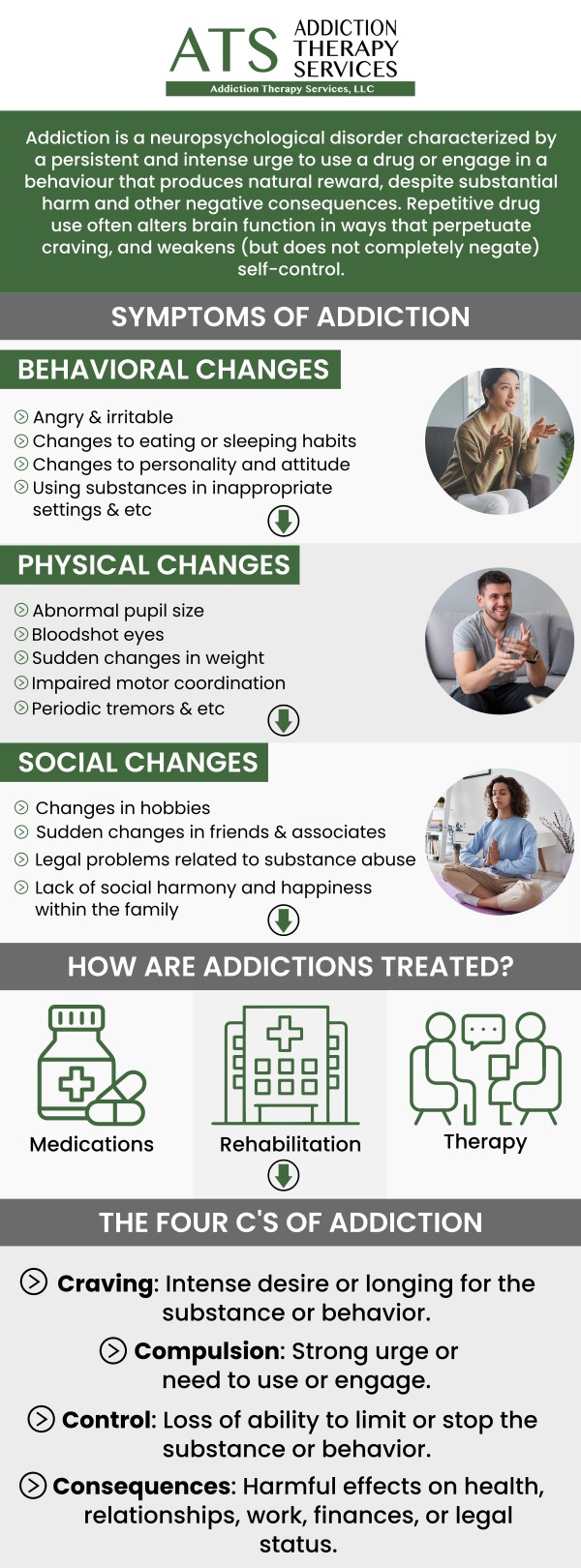
Table of Contents:
What are the common signs that someone may need addiction treatment?
How can changes in behavior or daily life indicate a need for addiction support?
When should someone consider seeking professional help for addiction concerns?
How can addiction treatment help individuals address substance use challenges and work toward recovery?
Understanding When Addiction Support May Be the Right Step
Personalized Addiction Treatment Focused on Individual Needs
Taking the First Step Toward Recovery Support
Addiction Treatment Support in Columbus, OH
Common signs that someone may benefit from addiction treatment can include changes in substance use patterns, physical health, emotional well-being, and daily responsibilities. Recognizing these signs early may help individuals access support before challenges become more difficult to manage.
Common Signs That May Indicate a Need for Addiction Support:
• Difficulty controlling or reducing substance use despite wanting to stop
• Strong cravings or frequent thoughts about using substances
• Needing larger amounts of a substance to achieve the same effect
• Experiencing withdrawal symptoms when not using a substance
• Continuing substance use despite problems at work, school, home, or in relationships
• Spending significant time obtaining, using, or recovering from substance use
• Losing interest in hobbies, activities, or relationships that were once important
• Increased secrecy, isolation, or changes in behavior
• Mood changes such as irritability, anxiety, stress, or emotional instability
• Using substances to cope with difficult emotions or daily challenges
Addiction can affect each person differently, and noticing these signs does not mean every individual has the same experience. A professional evaluation can help determine whether addiction treatment and support may be appropriate.
Changes in daily routines, relationships, and personal responsibilities may be signs that substance use is affecting a person’s overall well-being. Some individuals may begin withdrawing from loved ones, missing important obligations, or experiencing challenges maintaining work, school, or personal commitments.
Behavioral and Lifestyle Changes That May Require Attention:
• Avoiding family members, friends, or social activities
• Increased conflicts with loved ones
• Declining performance at work or school
• Neglecting personal care or responsibilities
• Spending more time focused on obtaining or using substances
• Making risky decisions while under the influence
• Feeling unable to manage daily life without substance use
• Experiencing ongoing stress related to substance use
When these changes begin impacting quality of life, seeking professional guidance can provide an opportunity to better understand the situation and explore available support options.
Professional addiction support may be beneficial when substance use becomes difficult to manage or begins affecting physical health, emotional wellness, relationships, or daily responsibilities. Individuals do not have to wait until they experience severe consequences before reaching out for help.
Situations That May Indicate It Is Time to Seek Support:
• Repeated attempts to stop or reduce substance use have not been successful
• Substance use is affecting relationships or responsibilities
• Withdrawal symptoms occur when stopping use
• Substance use feels necessary to get through the day
• There are concerns about physical or emotional health
• Loved ones have expressed concern about substance use
• Daily routines are increasingly centered around obtaining or using substances
Seeking help early can allow individuals to better understand their challenges and explore treatment options designed around their specific needs and recovery goals.
Addiction treatment provides personalized support to help individuals understand substance use concerns, develop healthier coping strategies, and work toward recovery. Treatment approaches may include Medication-Assisted Treatment (MAT) when appropriate, along with individual counseling and ongoing guidance to support each person’s recovery journey.
At Addiction Therapy Services, Dr. William Rothe, M.D. takes a collaborative approach to addiction treatment, focusing on the individual needs and goals of each patient. Through personalized care for opioid use disorder and alcohol use disorder, patients can receive support in a private and respectful medical setting while working toward meaningful recovery.
Recognizing possible signs of addiction is an important part of understanding when professional support may be helpful. At Addiction Therapy Services, Dr. William Rothe, M.D. helps individuals address substance use concerns through a compassionate and personalized approach. Seeking care early can help patients explore available treatment options, better understand their challenges, and take meaningful steps toward recovery in a supportive medical setting.
Every person’s experience with addiction is different, which is why treatment should be tailored to individual circumstances, goals, and recovery needs. Dr. William Rothe, M.D. at Addiction Therapy Services focuses on creating a collaborative treatment experience that supports each patient’s unique journey. The approach emphasizes communication, trust, and personalized guidance rather than a one-size-fits-all model.
Beginning addiction treatment starts with a confidential conversation. Addiction Therapy Services provides a private and respectful environment where individuals can discuss their concerns and learn about available support options. With guidance from Dr. William Rothe, M.D., patients can take the first step toward receiving personalized addiction care designed around their needs and recovery goals.
If you are looking for compassionate addiction treatment in Columbus, OH, and nearby communities, Addiction Therapy Services provides confidential, personalized care in a professional medical setting. Conveniently serving individuals near areas such as W Henderson Road, Sawmill Road, and Bethel Road in Columbus, OH, as well as Bridge Park in Dublin, OH, the practice focuses on helping patients access support without the stigma often associated with traditional addiction clinics. Dr. William Rothe, M.D. provides a collaborative approach to addiction care, including Medication-Assisted Treatment (MAT) with individual counseling for individuals managing opioid use disorder and alcohol use disorder. Through private, respectful, and personalized treatment, ATS helps patients take meaningful steps toward recovery. For more information, contact us or schedule an appointment online. We are conveniently located at 4760 Sawmill Road, Suite B, Columbus, OH 43235. We serve patients from Columbus OH, Dublin OH, Upper Arlington OH, Hilliard OH, Worthington OH, and surrounding areas.

Check Out Our 5 Star Reviews


Additional Services You May Need
- Outpatient Alcohol Detoxification
- Heroin Addiction
- Suboxone Treatment
- Medication-Assisted Opiate Therapy
- Tobacco Cessation
- Benzodiazepine
- Drug Addiction
- Opioid Addiction
- Addiction Therapy
- Buprenorphine
- Alcohol Addiction
- Opioid Use Disorder with Mat
- Alcohol Use Disorder with Mat
- Sublocade Injections for Opioid Dependence
- Addiction Counseling

Additional Services You May Need
• Outpatient Alcohol Detoxification
• Heroin Addiction
• Suboxone Treatment
• Medication-Assisted Opiate Therapy
• Tobacco Cessation
• Benzodiazepine
• Drug Addiction
• Opioid Addiction
• Addiction Therapy
• Buprenorphine
• Alcohol Addiction
• Opioid Use Disorder with Mat
• Alcohol Use Disorder with Mat
• Sublocade Injections for Opioid Dependence
• Addiction Counseling




 Send Text
 How May I Help You?
